
Thursday, April 14, 2011
UAA Parking Machines
Good god man really? These machines are a joke. Not only are we paying tuition, but then we have to pay $4.00 a class or get a $35.00 ticket? (I know it pays for the parking lots and side walks to be cleaned and maintained) And on top of that, they suck! They take forever to work, 30 seconds between commands. A girl scout selling cookies can process faster than that. We are at the highest peak of technology, my phone can download a netflix movie while im in line, but those big ass machines cant process a credit card under 5 minutes. I've gotten 3 seperate $35.00 tickets and arrived late to class because those "hunks of junk" take way too long.

Response to SEXTING
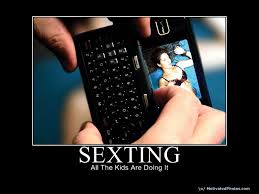
Sexting is only whispered about. It’s an all too sensitive subject which isnt spoken about nearly enough for a young hormone filled teenager with questions about their developing body. We tell them that everything is fine, and normal, and that it’s all a part of growing up. We tell them about pregnancy and std's, but sexting is never brought up. Parents have taught kids: don’t touch, don’t touch, don’t touch, throughout their entire childhood. They get the idea that pictures aren’t touching so therefore it's safe. Puberty is a confusing time for any teen, and it's no wonder why sexting became so popular. They’re flirting, being rebellious teenagers, connecting with others that are going through the same thing, and its not touching. Unfortunately, teens today are in the middle of new technology and outdated education. Once a picture is out there it can remain in circulation from cell phone to cell phone or be stored in someone’s picture archive, possibly get posted on the internet and after that happens it’ll be there forever.
Education is a huge part of diminishing sexting. And as elders, we have a responsibility to update our youth about the dangers in life. But until we find a way to create programs and techniques foreseeing--as our technology continues to grow--our future threats, then we will always be one step behind.
Education is a huge part of diminishing sexting. And as elders, we have a responsibility to update our youth about the dangers in life. But until we find a way to create programs and techniques foreseeing--as our technology continues to grow--our future threats, then we will always be one step behind.
Wednesday, April 13, 2011
SEXTING
Sexting: New Technology, Old Problem: Calling All Public -- and Other -- Health Professionals
Mary E. Muscari, PhD, CPNP, APRN-BC, CFNS
http://www.medscape.com/viewarticle/702078_5
This article suggests that sexting should be an issue addressed in school during sexual education (Sex Ed Class) along with birth control/unwanted pregnancy and std’s awareness. It needs to be brought up when parents talk to their teens about sex. Plus, it should be a physician’s question during medical exams.
The majority of sexting going on with underage teens not only could cause psychological trauma but could also be considered child pornography. If convicted you could have to register as a sex offender, enter in sex offender treatment programs with other sex offenders, have your photo posted on sex offender websites, be treated as an outcast, and have a tough time finding employment. The author provides several sources, tips, and levels of prevention for teens and parents.


Tuesday, April 12, 2011
Future Phones
Conti, J. (2008). Future phones. Engineering & Technology (17509637), 3(3), 72-76.
Phones? More like personal hand held super evolutionary life sensing mini computers. The future of cell phones will be absolutely insane. Devices will pack more processing power than today’s P.C.’s. With further developments in multi-core semiconductor architecture will allow hand sets to operate at teraflop speeds, making them considerably more than just a computer. They will come with better graphic interfaces and 3D screen technology. Sensors will be a huge part of these new mini super computer phone. They will be able to sense your body for security and medical purposes, surrounds environment, and the ability to sense forms of info-structure around you; atmospheric conditions like carbon monoxide levels, ground based ozone levels, ultraviolet radiation. And if all this could be combined with being user friendly, affordable, extremely durable, and error free; then there would be no reason for every person to not own this technology. I want one. Right Now!


Phones? More like personal hand held super evolutionary life sensing mini computers. The future of cell phones will be absolutely insane. Devices will pack more processing power than today’s P.C.’s. With further developments in multi-core semiconductor architecture will allow hand sets to operate at teraflop speeds, making them considerably more than just a computer. They will come with better graphic interfaces and 3D screen technology. Sensors will be a huge part of these new mini super computer phone. They will be able to sense your body for security and medical purposes, surrounds environment, and the ability to sense forms of info-structure around you; atmospheric conditions like carbon monoxide levels, ground based ozone levels, ultraviolet radiation. And if all this could be combined with being user friendly, affordable, extremely durable, and error free; then there would be no reason for every person to not own this technology. I want one. Right Now!
Online Dating
Madrigal, Alexis (2010, Dec). Take the data out of dating. Atlantic Monthly,Vol. 306 Issue 5, p37. Retrieved from EBSCOhost
Essentially Googling your way to “the one” online dating is getting more and more popular. 74 percent of singles looking for a mate now turn to dating sites like eHarmony, Match.com, and OkCupid. Instead of looking at random people within your search criteria, these sites use algorithms. In the beginning you are asked a series of questions and based on your answers to these questions it is determined who you will pop up for and who will pop up for. But there is more factors than just physical or personality preferences. They watch whos profile you pick, categorizing and calculating statistics. White male tend to get more responses so more white males will show up in your search regardless of preference. They claim to hone in on key traits for long lasting relationships but the majority of algorithms end up just reinforcing whatever societal values happen to be dominant, without us even noticing. They are normativity made into code -- albeit a code that we barely understand, even as it shapes our lives.

Essentially Googling your way to “the one” online dating is getting more and more popular. 74 percent of singles looking for a mate now turn to dating sites like eHarmony, Match.com, and OkCupid. Instead of looking at random people within your search criteria, these sites use algorithms. In the beginning you are asked a series of questions and based on your answers to these questions it is determined who you will pop up for and who will pop up for. But there is more factors than just physical or personality preferences. They watch whos profile you pick, categorizing and calculating statistics. White male tend to get more responses so more white males will show up in your search regardless of preference. They claim to hone in on key traits for long lasting relationships but the majority of algorithms end up just reinforcing whatever societal values happen to be dominant, without us even noticing. They are normativity made into code -- albeit a code that we barely understand, even as it shapes our lives.
Google search: 30 most common words in English
In response to my own post “The Machine is Us/ing Us” I decided to Google search the “30 most common words in English” 1-30 in order are: the, of, to, and, a, in, is, it, you, that, he, was, for, on, are, with , as, I, his, they, be, at, one, have, this, from, or, had, by, (and) hot
“fluffy kittens” didn’t pop up, so it looks like the “Machine” is doing its job in giving us order.

“fluffy kittens” didn’t pop up, so it looks like the “Machine” is doing its job in giving us order.
The Machine is Us/ing Us
http://www.youtube.com/watch?v=NLlGopyXT_g
This is a great video breaking down the basics of internet code and how search engines/ websites determine what you’re searching for. It’s the first time I’ve seen this video but the idea of “The Machine” using us to help us find what we are looking for isn’t news to me. Of course, if I type in fluffy cat and hit search the first things that will pop up are the most popular site that were looked at after one typed in fluffy cats; then where I go from there will be analyzed and if there are any similarities basted on others searches, those will then be offered to me. It’s a perfect system because it allows for all the extra or unused material to go to the bottom of the list. I encourage “The Machine" to continue this. There has to be an order in which information is given, otherwise we could be given the fundamentals of construction when we look up fluffy kittens. Everything has basic order. You don’t put your perishable food in your piano, (unless your hiding it, but then I guess that would be in a certain order) you put them in the refrigerator. And I cant begin to comprehend all the work that thousands of people have done to create this “Machine”, but I know why order exists and how to use it to make life and research easier.
This is a great video breaking down the basics of internet code and how search engines/ websites determine what you’re searching for. It’s the first time I’ve seen this video but the idea of “The Machine” using us to help us find what we are looking for isn’t news to me. Of course, if I type in fluffy cat and hit search the first things that will pop up are the most popular site that were looked at after one typed in fluffy cats; then where I go from there will be analyzed and if there are any similarities basted on others searches, those will then be offered to me. It’s a perfect system because it allows for all the extra or unused material to go to the bottom of the list. I encourage “The Machine" to continue this. There has to be an order in which information is given, otherwise we could be given the fundamentals of construction when we look up fluffy kittens. Everything has basic order. You don’t put your perishable food in your piano, (unless your hiding it, but then I guess that would be in a certain order) you put them in the refrigerator. And I cant begin to comprehend all the work that thousands of people have done to create this “Machine”, but I know why order exists and how to use it to make life and research easier.
Is Google Making Us Stupid?
Nicholas Carr (2008, July/August) Is Google making us stupid? Atlantic Magazine
This is a great article with many resources , conversations and studies mentioned. Though he is definitely honing in on Google and the internet, what I take from it is our drive to have the quick and easy information “Right Now!”. Rather than the detailed ins and outs of that subject. We are essentially teaching ourselves to be less patient. He mentions “the advantages of having immediate access to such an incredibly rich store of information seems to be chipping away his capacity for concentration and contemplation“. (Which I think practically everything we do has taught us this demeanor.While watching T.V. we flip from channel to channel until we are satisfied. Eating fast food because we are either too busy or too lazy to cook for ourselves. Driving a car to get us somewhere faster than our legs can get us their. Messengers turned into the post office turned into emails and text message; what’s next? Maybe Thoreau was onto something. Google cant control you, it can only provide you with the tools to be controlled. You will always have a choice. Would you rather have a full, rich, chaotic, and stressful life filled with constant activity? Or a slow, simple, and soothing life with more spiritual understanding?)Like Kubrick’s dark prophecy “As we come to rely on computers to mediate our understanding of the world, it is our own intelligence that flattens into artificial intelligence.“

This is a great article with many resources , conversations and studies mentioned. Though he is definitely honing in on Google and the internet, what I take from it is our drive to have the quick and easy information “Right Now!”. Rather than the detailed ins and outs of that subject. We are essentially teaching ourselves to be less patient. He mentions “the advantages of having immediate access to such an incredibly rich store of information seems to be chipping away his capacity for concentration and contemplation“. (Which I think practically everything we do has taught us this demeanor.While watching T.V. we flip from channel to channel until we are satisfied. Eating fast food because we are either too busy or too lazy to cook for ourselves. Driving a car to get us somewhere faster than our legs can get us their. Messengers turned into the post office turned into emails and text message; what’s next? Maybe Thoreau was onto something. Google cant control you, it can only provide you with the tools to be controlled. You will always have a choice. Would you rather have a full, rich, chaotic, and stressful life filled with constant activity? Or a slow, simple, and soothing life with more spiritual understanding?)Like Kubrick’s dark prophecy “As we come to rely on computers to mediate our understanding of the world, it is our own intelligence that flattens into artificial intelligence.“
Monday, April 11, 2011
Driving Us to Distraction
Cruz, G., & Oloffson, K. (2009). Driving Us to Distraction. Time, 174(7), 45-46. Retrieved from EBSCOhost.
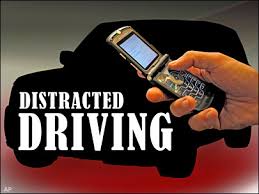
This article talks about the dangers of using cell phones while driving. How using hands free devices can be just as dangerous as dialing, talking, or texting. Noting the July 2009 publication of cell-phone safety hazard information from a 2003 U.S. National Highway Traffic Safety Administration study by the Center for Auto Safety (CAS). Citing statistics on states that have “Hands-free” laws which restrict certain cell-phone use while driving. Some of Strayer's findings show that most drivers tend to stare straight ahead while using a cell phone and are less influenced by peripheral vision. One study even showed drivers with .08 Blood Alcohol Content (BAC) were faster to brake and caused few crashes than while sober and talking on a cell phone. The organization's goal is to "make talking and driving as socially unacceptable as drinking and driving," he says. "It's just a question of when we get there."
This article talks about the dangers of using cell phones while driving. How using hands free devices can be just as dangerous as dialing, talking, or texting. Noting the July 2009 publication of cell-phone safety hazard information from a 2003 U.S. National Highway Traffic Safety Administration study by the Center for Auto Safety (CAS). Citing statistics on states that have “Hands-free” laws which restrict certain cell-phone use while driving. Some of Strayer's findings show that most drivers tend to stare straight ahead while using a cell phone and are less influenced by peripheral vision. One study even showed drivers with .08 Blood Alcohol Content (BAC) were faster to brake and caused few crashes than while sober and talking on a cell phone. The organization's goal is to "make talking and driving as socially unacceptable as drinking and driving," he says. "It's just a question of when we get there."
Marc's Facebook Addiction
This is a response to Marc’s post “Kyle’s Facebook Addiction” which is a response to Kyle’s post “Facebook Addiction”. I was hesitant to get a facebook account in the beginning. Fads come and go, but after a couple years I finally caved and got an account. I’ve been on it ever since. Checking wall posts, friend requests, relationship statuses, uploaded pictures, ect. Facebook makes keeping in touch with friends simple. Past conversations and recent activity is easily read. Ive found that I even put school work on hold to check Facebook. Its almost like checking the time, but instead of take a few seconds to glance at a clock, you end up losing 10, 15, 20 minutes checking and commenting on recent friend activity. I wouldn’t say that Facebook is a waste of time, because you are keeping in touch with many friends. The time that it would take to call and catch up is much greater than quickly reading and adding a comment. But since it is so easy to stay in touch with a few friends then it eventually leads to more. I even feel bad if I don’t comment enough, almost like im neglecting friendships. I think it's save to say that I am addicted to Facebook too.

Friday, April 8, 2011
TWEET TWEET!
Malcolm Gladwell tells a story of a dinner in 1960, where a small group of black students were unable to order due to their “No Negro“ policy. They were asked to leave, but instead stood their ground. Through the span of one month, thousand of people both white and black arrived to show their support. Gladwell’s title "
Small Change; Why the revolution will not be tweeted" is because he believes that traditional activism is more powerful than digital activism. Unfortunately, he published this idea a little too soon. We now realize that this media can be very influential. As proof; resent uproars in Egypt and Libya were strongly fueled by digital media. People have used this tool to connect, communicate, and demonstrate more effectively. Only through modern technology could their message and direction be so unified.
Tuesday, April 5, 2011
"Where I Lived, and What I Lived For"
http://www.vcu.edu/engweb/transcendentalism/authors/thoreau/walden/chapter02.html
David Thoreau, H. (2002). 'Where I Lived, and What I Lived For'. Literary Cavalcade, 55(3), 5. Retrieved from EBSCOhost.
Henry David Thoreau is communicating that life is all round us, and that speed doesn’t give it to us faster but instead hides the richness in life. He is writing in hopes to enlighten the burden that the speeders (of his time) are ignorant to. Time is a stream and not one to get swept away by, but one to fish and drink from. Thoreau was concerned that the progression of society would numb us to the joys of nature. He set off into the wood and lived a fairly independent and simplistic lifestyle while documenting his thoughts and writing his famous book “Walden”. Interestingly enough, the ones that demote progression are remembered because of it. Carving and painting on stone was once the peak of technology, but even stone is subject to weathering and will eventually fade; because of modern technology the words in books and blogs will last forever.
 Henry David Thoreau (born David Henry Thoreau; July 12, 1817 – May 6, 1862)
David Thoreau, H. (2002). 'Where I Lived, and What I Lived For'. Literary Cavalcade, 55(3), 5. Retrieved from EBSCOhost.
Henry David Thoreau is communicating that life is all round us, and that speed doesn’t give it to us faster but instead hides the richness in life. He is writing in hopes to enlighten the burden that the speeders (of his time) are ignorant to. Time is a stream and not one to get swept away by, but one to fish and drink from. Thoreau was concerned that the progression of society would numb us to the joys of nature. He set off into the wood and lived a fairly independent and simplistic lifestyle while documenting his thoughts and writing his famous book “Walden”. Interestingly enough, the ones that demote progression are remembered because of it. Carving and painting on stone was once the peak of technology, but even stone is subject to weathering and will eventually fade; because of modern technology the words in books and blogs will last forever.

Thursday, March 31, 2011
“Television the Plug-in Drug”
http://www.mariewinn.com/index.htm
Hommerding, L. (2002). The Plug-In Drug (Book). Library Journal, 127(8), 116. Retrieved from EBSCOhost.
“Television the Plug-in Drug” by Marie Winn (pp. 438-447 in 50 Essays) 2010
The family time that experts once believed the television would be has backfired and replaced with an everyday military like regiment. Wake up, go to school, watch television, and go to bed. Parents have allowed the television to become the primary source for their children’s home life experience. Although it allows for peace and quiet within the home, the quality family time suffers. Winn references the conflicts that family’s had to deal with prior to the multi-television home is an essential part in family life. The home has become another form of a care taking institution rather than an accumulation of memory making experiences that can and will follow the children into their adulthood. In her essay, Winn defines ritual by sociologists as “that part of family life that the family likes about itself, is proud of and wants formally to continue”. Rituals give us a sense of security; they are dependable. She offers practical suggestions on how to improve family life not dependent on television. This refreshingly candid and inviting study is highly recommended for both public and academic libraries.

VS
Hommerding, L. (2002). The Plug-In Drug (Book). Library Journal, 127(8), 116. Retrieved from EBSCOhost.
“Television the Plug-in Drug” by Marie Winn (pp. 438-447 in 50 Essays) 2010
The family time that experts once believed the television would be has backfired and replaced with an everyday military like regiment. Wake up, go to school, watch television, and go to bed. Parents have allowed the television to become the primary source for their children’s home life experience. Although it allows for peace and quiet within the home, the quality family time suffers. Winn references the conflicts that family’s had to deal with prior to the multi-television home is an essential part in family life. The home has become another form of a care taking institution rather than an accumulation of memory making experiences that can and will follow the children into their adulthood. In her essay, Winn defines ritual by sociologists as “that part of family life that the family likes about itself, is proud of and wants formally to continue”. Rituals give us a sense of security; they are dependable. She offers practical suggestions on how to improve family life not dependent on television. This refreshingly candid and inviting study is highly recommended for both public and academic libraries.
VS
GAMES.
Johnson, S. (2011). Games. In S. Cohen (Ed.) , 50 Essays (pp. 196-201). Boston: Bedford/St. Martin's.
In “Games” Steven Johnson highlights the importance of reading books but also the underappreciated benefits of video games. His purpose is comparing reading and video games as entertainment and educational tools. Video games improve not only hand-eye coordination and visual intelligence, they also encourage drive and the speed of information exercises the mind in new and powerful ways. Johnson argues that games improve one’s imagination and problem solving abilities. He imagines arguments that could be made against books (such as their linearity and isolating qualities) if video games had been invented first. Johnson’s essay might help us better appreciate the creativity and intellectual benefits behind both traditional reading and modern video games.

In “Games” Steven Johnson highlights the importance of reading books but also the underappreciated benefits of video games. His purpose is comparing reading and video games as entertainment and educational tools. Video games improve not only hand-eye coordination and visual intelligence, they also encourage drive and the speed of information exercises the mind in new and powerful ways. Johnson argues that games improve one’s imagination and problem solving abilities. He imagines arguments that could be made against books (such as their linearity and isolating qualities) if video games had been invented first. Johnson’s essay might help us better appreciate the creativity and intellectual benefits behind both traditional reading and modern video games.
Thursday, March 24, 2011
Subscribe to:
Posts (Atom)