Tuesday, April 12, 2011

Google search: 30 most common words in English

In response to my own post “The Machine is Us/ing Us” I decided to Google search the “30 most common words in English” 1-30 in order are: the, of, to, and, a, in, is, it, you, that, he, was, for, on, are, with , as, I, his, they, be, at, one, have, this, from, or, had, by, (and) hot

“fluffy kittens” didn’t pop up, so it looks like the “Machine” is doing its job in giving us order.

The Machine is Us/ing Us

http://www.youtube.com/watch?v=NLlGopyXT_g

This is a great video breaking down the basics of internet code and how search engines/ websites determine what you’re searching for. It’s the first time I’ve seen this video but the idea of “The Machine” using us to help us find what we are looking for isn’t news to me. Of course, if I type in fluffy cat and hit search the first things that will pop up are the most popular site that were looked at after one typed in fluffy cats; then where I go from there will be analyzed and if there are any similarities basted on others searches, those will then be offered to me. It’s a perfect system because it allows for all the extra or unused material to go to the bottom of the list. I encourage “The Machine" to continue this. There has to be an order in which information is given, otherwise we could be given the fundamentals of construction when we look up fluffy kittens. Everything has basic order. You don’t put your perishable food in your piano, (unless your hiding it, but then I guess that would be in a certain order) you put them in the refrigerator. And I cant begin to comprehend all the work that thousands of people have done to create this “Machine”, but I know why order exists and how to use it to make life and research easier.

Is Google Making Us Stupid?

Nicholas Carr (2008, July/August) Is Google making us stupid? Atlantic Magazine

This is a great article with many resources , conversations and studies mentioned. Though he is definitely honing in on Google and the internet, what I take from it is our drive to have the quick and easy information “Right Now!”. Rather than the detailed ins and outs of that subject. We are essentially teaching ourselves to be less patient. He mentions “the advantages of having immediate access to such an incredibly rich store of information seems to be chipping away his capacity for concentration and contemplation“. (Which I think practically everything we do has taught us this demeanor.While watching T.V. we flip from channel to channel until we are satisfied. Eating fast food because we are either too busy or too lazy to cook for ourselves. Driving a car to get us somewhere faster than our legs can get us their. Messengers turned into the post office turned into emails and text message; what’s next? Maybe Thoreau was onto something. Google cant control you, it can only provide you with the tools to be controlled. You will always have a choice. Would you rather have a full, rich, chaotic, and stressful life filled with constant activity? Or a slow, simple, and soothing life with more spiritual understanding?)Like Kubrick’s dark prophecy “As we come to rely on computers to mediate our understanding of the world, it is our own intelligence that flattens into artificial intelligence.“

Monday, April 11, 2011

Driving Us to Distraction

Cruz, G., & Oloffson, K. (2009). Driving Us to Distraction. Time, 174(7), 45-46. Retrieved from EBSCOhost.


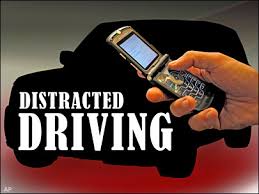
This article talks about the dangers of using cell phones while driving. How using hands free devices can be just as dangerous as dialing, talking, or texting. Noting the July 2009 publication of cell-phone safety hazard information from a 2003 U.S. National Highway Traffic Safety Administration study by the Center for Auto Safety (CAS). Citing statistics on states that have “Hands-free” laws which restrict certain cell-phone use while driving. Some of Strayer's findings show that most drivers tend to stare straight ahead while using a cell phone and are less influenced by peripheral vision. One study even showed drivers with .08 Blood Alcohol Content (BAC) were faster to brake and caused few crashes than while sober and talking on a cell phone. The organization's goal is to "make talking and driving as socially unacceptable as drinking and driving," he says. "It's just a question of when we get there."

Marc's Facebook Addiction


This is a response to Marc’s post “Kyle’s Facebook Addiction” which is a response to Kyle’s post “Facebook Addiction”. I was hesitant to get a facebook account in the beginning. Fads come and go, but after a couple years I finally caved and got an account. I’ve been on it ever since. Checking wall posts, friend requests, relationship statuses, uploaded pictures, ect. Facebook makes keeping in touch with friends simple. Past conversations and recent activity is easily read. Ive found that I even put school work on hold to check Facebook. Its almost like checking the time, but instead of take a few seconds to glance at a clock, you end up losing 10, 15, 20 minutes checking and commenting on recent friend activity. I wouldn’t say that Facebook is a waste of time, because you are keeping in touch with many friends. The time that it would take to call and catch up is much greater than quickly reading and adding a comment. But since it is so easy to stay in touch with a few friends then it eventually leads to more. I even feel bad if I don’t comment enough, almost like im neglecting friendships. I think it's save to say that I am addicted to Facebook too.

Friday, April 8, 2011

TWEET TWEET!

Malcolm Gladwell tells a story of a dinner in 1960, where a small group of black students were unable to order due to their “No Negro“ policy. They were asked to leave, but instead stood their ground. Through the span of one month, thousand of people both white and black arrived to show their support. Gladwell’s title "
Small Change; Why the revolution will not be tweeted" is because he believes that traditional activism is more powerful than digital activism. Unfortunately, he published this idea a little too soon. We now realize that this media can be very influential. As proof; resent uproars in Egypt and Libya were strongly fueled by digital media. People have used this tool to connect, communicate, and demonstrate more effectively. Only through modern technology could their message and direction be so unified.

Tuesday, April 5, 2011

"Where I Lived, and What I Lived For"

http://www.vcu.edu/engweb/transcendentalism/authors/thoreau/walden/chapter02.html

David Thoreau, H. (2002). 'Where I Lived, and What I Lived For'. Literary Cavalcade, 55(3), 5. Retrieved from EBSCOhost.

Henry David Thoreau is communicating that life is all round us, and that speed doesn’t give it to us faster but instead hides the richness in life. He is writing in hopes to enlighten the burden that the speeders (of his time) are ignorant to. Time is a stream and not one to get swept away by, but one to fish and drink from. Thoreau was concerned that the progression of society would numb us to the joys of nature. He set off into the wood and lived a fairly independent and simplistic lifestyle while documenting his thoughts and writing his famous book “Walden”. Interestingly enough, the ones that demote progression are remembered because of it. Carving and painting on stone was once the peak of technology, but even stone is subject to weathering and will eventually fade; because of modern technology the words in books and blogs will last forever.


Henry David Thoreau (born David Henry Thoreau; July 12, 1817 – May 6, 1862)